
What Makes a Celebrity Magician? And Why the Best One Isn't Who You Think
The term gets applied to anyone with a television credit. Here's what it actually means — and what it looks like when a room full of Fortune 500 executives completely loses composure.
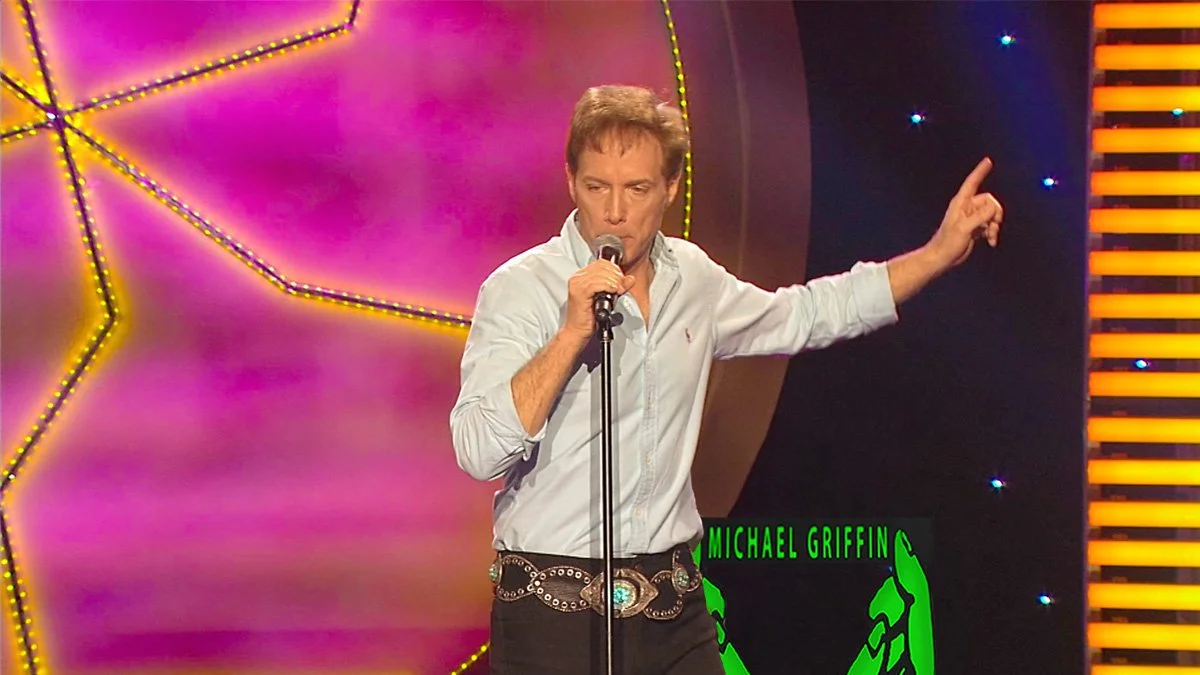
Michael Griffin, the world’s top escape artist, stars on Masters of Illusion.
The room is full of people who are very difficult to impress.
These are executives who have been to every kind of corporate event. They have sat through keynote speakers, jazz quartets, comedy roasts, and chef's table dinners. They have seen the standard options and they have learned, over years of attending these things, to engage politely while remaining essentially unmoved.
Then something happens three feet in front of them that they cannot explain. Something that wasn't supposed to be possible in a space they can see completely, with their own hands, in full view of their colleagues. And the reaction that comes out of them — unguarded, involuntary, completely out of character for a person of their professional stature — is not polite applause.
"How in the fuck did you do that right under my nose?"
That reaction. From people who don't react like that. In rooms where nothing is supposed to catch them off guard.
That's what a celebrity magician is actually for — not decoration, not entertainment in the background, not a talking point in a post-event survey. A genuine disruption of the composure of people whose composure is essentially their professional identity.
Most performers who carry the title celebrity magician cannot produce that reaction. A small number can. One produces it consistently, in some of the most exclusive private events in the world, for clients whose names would be immediately recognized by anyone reading this — and who will never be named here, because that's the arrangement.
What 'Celebrity Magician' Actually Means in 2026
The term has been diluted. Anyone with a television appearance and a publicist now carries the label. A performer who appeared in a single segment on a streaming special is a celebrity magician. A social media creator with a million followers who films close-up card tricks in good lighting is a celebrity magician. The word has expanded to cover so much territory that it no longer means what it used to.
What it used to mean — what it should still mean — is a performer whose reputation precedes them in a room. Someone whose name, when mentioned to the person sitting next to you at a corporate dinner, produces a response. Not blank recognition, not polite acknowledgment, but something more specific: a memory of having seen something they still can't explain, or a recommendation from someone they trust who was in that room and still talks about it.
That kind of reputation is not built by television appearances alone. Television appearances build name recognition. Reputation is built by what happens in the room — what people say to each other after, what they tell their assistant to find out about booking, what they bring up three years later when the conversation turns to the best event they've ever attended.
The celebrity magicians who have built that kind of reputation are a much shorter list than the ones carrying the title.
What a Fortune 500 Room Actually Needs
Corporate event entertainment has a specific and underappreciated problem: the audience is too sophisticated for most of what gets booked.
A comedian who kills at a club may die in a boardroom. The power dynamics are different, the permission structures are different, the audience's relationship to surprise and vulnerability is different. A band that fills a venue may become background noise at a corporate party. A motivational speaker who moves a general audience may lose a room of C-suite executives in the first five minutes.
What works in a Fortune 500 private event is something that meets that room at its own level — and then takes it somewhere it didn't expect to go. The entertainment has to be sophisticated enough to earn the attention of people who are very good at withholding it. And then it has to do something those people have no framework for.
Close-up magic — performed by someone who genuinely knows what they're doing, in a great room stuffed with recognizable faces, moving from group to group — does this better than almost any other format. There is no stage separation. No performer-audience contract that gives the audience permission to stay at a distance. The magic happens three feet away, with objects from the room, in the middle of a conversation that was happening a moment before. There is nowhere to hide and no reason to be polite about it.
When it works, the room changes. The conversations that were happening stop. People call others over. The executive who has been checking his phone puts it face-down. The CFO who arrived planning to leave early is still there an hour later trying to figure out what she saw.
When it works at the highest level, people ask the question they didn't know they still had in them.
"How in the fuck did you do that right under my nose?"
Michael Griffin in a Private Corporate Setting
Michael Griffin has performed for private corporate clients whose names appear on lists of the most recognized companies in the world. The specific clients are confidential — that's the nature of private events at that level. What is not confidential is what happens in those rooms.
Griffin works close. Not stage close — conversation close. The magic happens in the middle of an outdoor party, in a great room at capacity, after dinner when the room is warm and the guard is down and the people who were going to leave have decided to stay another twenty minutes. It happens with objects that belong to the people in the room. It happens in full view, slowly enough that there is no moment of distraction to blame, no sleight of hand fast enough to miss, no reason the thing that just happened should have been possible.
And it happens to people who are very, very hard to fool.
That last part matters more than anything else in a corporate setting. A room full of Fortune 500 executives has a specific relationship to being fooled — they are professionally trained to see through things, to identify the mechanism, to find the exit before it closes. When something happens in front of them that they cannot place into any available category, the reaction is not the polite wonder of a general audience. It is something more personal. Something that gets past the professional exterior entirely.
Griffin's show runs like a concert setlist. Each act has its own arc, its own build, its own moment. In a corporate setting that translates directly: each interaction is its own contained experience, with its own energy, calibrated to the specific room and the specific people in it. No two performances are the same because no two rooms are the same. What works in a great room at capacity is different from what works at an outdoor party with a crowd that has been drinking for two hours. Griffin reads the room and adjusts — which is itself a skill that most performers who call themselves celebrity magicians do not have.
The feedback that comes back after these events is not the language of entertainment satisfaction surveys. It is the language of people who experienced something they did not expect and cannot fully account for. Clients who have never contacted a performer after an event contact Griffin. Guests who attended as plus-ones become the people making the booking call for the next event.
The referral network that has built around his private corporate work is, by definition, invisible. The clients don't talk publicly about who performs at their private events. But the calls keep coming — from the kind of people who have access to every entertainment option available and have decided, based on what they saw in someone else's room, that this is the one they want in theirs.
Why Griffin Is Different From Every Other Celebrity Magician Working Today
Most celebrity magicians perform. Griffin performs and escapes — and the combination of those two things in a single show creates an experience that no other performer currently offers at any level.
The magic acts are genuine close-up work, developed over decades, that holds a room of sophisticated skeptics at conversation distance and produces reactions those people don't normally have. The escape work — real restraints, real danger, real outcomes determined in real time — creates the kind of sustained attention that no other format generates. Together, the show moves through different emotional registers in a way that a single-discipline performer cannot match.
He is the only two-time winner of Best Escape Artist at both the World Magic Awards and the International Magic Awards. He has appeared on America's Got Talent, where Howard Stern told him on air: "I really like you a lot." He has 17 television segments across Masters of Illusion and Extreme Escapes. He maintains a $100,000 open challenge — any venue, any restraint — that has never been collected.
Those credentials open the door. What happens in the room is what gets the referral.
In a corporate setting, the $100,000 challenge has a specific kind of resonance that it doesn't have in a general audience show. The executives in those rooms understand the concept of a standing offer that nobody has been able to collect. They understand what it means to put a number on a claim and let the market test it. It speaks a language they recognize — and it reframes what they're about to watch from entertainment into something that operates by different rules.
Nobody has collected. The offer stands. The room gets very quiet when that's explained.
So What Makes a Celebrity Magician Worth Booking?
Not the television credits, though those matter for the conversation that happens before the event.
Not the name recognition, though that matters for the internal approval process when someone is making the case to their planning committee.
What makes a celebrity magician worth booking for a private Fortune 500 event is a single, specific thing: the ability to produce a genuine, unguarded, involuntary reaction from people who have spent their entire professional careers learning not to have those.
That reaction — the one that bypasses the professional exterior entirely and produces something true from a person who is very practiced at managing what they show — is the rarest thing a live performer can produce. It is also the thing that generates the referral, the repeat booking, the call from the guest who attended someone else's event and needs to know who that was.
Most celebrity magicians produce appreciation. A few produce astonishment. One produces the reaction that gets described, years later, in language that was never intended for professional correspondence.
"How in the fuck did you do that right under my nose?"
That's the standard. And it's the one worth booking toward.
Frequently Asked Questions
What is a celebrity magician?
A celebrity magician is a professional performer with sufficient name recognition and reputation that their booking carries social proof — guests recognize the name before the event and discuss the performance after. At the highest level, a celebrity magician is someone whose reputation is built not just on television appearances but on what happens in private rooms that the public never sees.
How much does a celebrity magician cost for a corporate event?
Corporate bookings for top-tier celebrity magicians vary significantly based on the performer, the event format, the location, and the duration. Contact Michael Griffin directly for corporate event pricing at MichaelGriffinEscapes.com.
What type of corporate events work best with a magician?
Private dinners, after-dinner entertainment, outdoor corporate parties, and exclusive company events work particularly well with close-up magic at the celebrity level. The format performs best when the performer can work the room directly rather than from a stage — the closer the magic happens to the audience, the stronger the reaction.
What makes Michael Griffin different from other corporate magicians?
Griffin combines close-up magic with genuine escape artistry — real restraints, real danger, real outcomes — in a single show that moves through different emotional registers. He has performed for private Fortune 500 clients and exclusive corporate events worldwide. His $100,000 open challenge has never been collected.
How do you book a celebrity magician for a private event?
Contact Michael Griffin directly through MichaelGriffinEscapes.com. Private corporate events are handled confidentially. Client references are available on request within appropriate confidentiality arrangements.
What happens when a celebrity magician performs at a corporate event?
At the highest level — when the performer is right for the room — the standard corporate event dynamic changes entirely. Conversations stop. Phones go away. People who came planning to leave early stay. And the executives who are professionally trained to maintain composure in every situation produce reactions they didn't know they still had.
Michael Griffin is recognized as one of the most famous magicians and escape artists performing today — and the performer whose private corporate work has built a referral network among some of the most recognizable companies in the world.
Book Michael Griffin for Your Private Event
Michael Griffin performs for Fortune 500 companies, exclusive private events, outdoor corporate parties, and after-dinner engagements worldwide. All private bookings are handled with full confidentiality.
His $100,000 open challenge — any venue, any restraint — has never been collected. His referral network speaks for itself.